
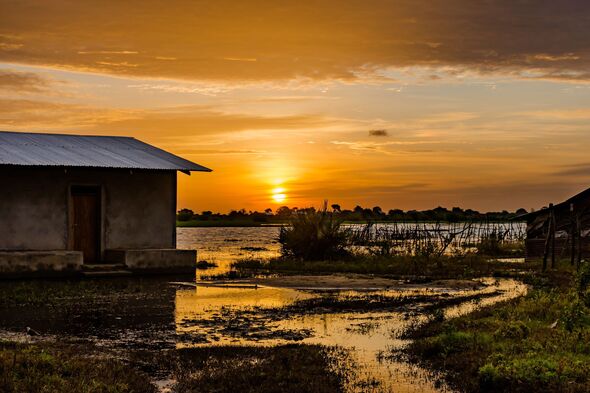
The dawn over the coast came softly, the kind that crept in on the sound of waves and the rustle of coconut leaves. In the village, roosters crowed without urgency, unaware that a marriage was ending.
Sarah stood at the edge of the homestead; her kanga tied tightly around her waist. The earth beneath her feet was cool, still holding the night’s breath. He stood a few steps away, close enough to feel her presence, far enough to know she was already leaving.
“Go,” he said, his voice low like the tide at dawn.
“Just go, Sarah.”
His hand still held hers, not in strength, but in memory. Slowly, he loosened his fingers, as if love itself needed time to let go.
“Don’t look back,” he added. “The past has learned how to hurt us.”
Once, this place had known celebration. When they married, the village danced. Drums echoed through the palms, women ululated, and elders spoke blessings under the shade of mango trees. Two lovers had become family. His people had become hers. Her relatives had become his own.
Marriage had felt like the ocean, wide, promising, endless.
But seasons change, even at the coast.
Small disagreements grew like cracks in coral. Words spoken in anger did not dissolve like salt in water; they stayed, sharp and painful. Expectations went unmet. Silence settled where laughter used to live.
Love did not disappear.
It simply grew tired.
Divorce arrived quietly, carried on bitter words and wounded pride. People who once admired them now whispered behind doors. Friends asked questions that had no answers. Some even joked cruelly, as if separation was a festival.
“Will there be a feast?” they laughed.
“Will we dance?”
Sarah felt her chest tighten every time she heard it.
How could a breaking be celebrated?
At the market, she cried to anyone who would listen.
“He never provided,” she said. “I struggled alone.”
At the bus stage, he defended himself just as loudly.
“She turned everyone against me,” he said. “Even my home rejected me.”
What should have remained between two hearts spilled into the village paths. Relatives chose sides. Elders shook their heads. The house no longer belonged to the couple; it belonged to opinions.
When time wouldn’t bend
Those who once stood with him now feared Sarah.
Those who once welcomed Sarah now called him an enemy.
Marriage, he learned too late, is not only between two people at the coast, it is tied to families, clans, and expectations heavier than the humid air.
Now Sarah stepped onto the sandy path leading away from the homestead. Days would become weeks. Weeks would become months. Time, like the tide, would not wait.
He turned toward the river that wound its way to the sea, the same place where they once dreamed of building a future. Standing at the bank, he raised his hand and waved, not to stop her, not to pull her back, but to honour what had been.
“Go,” he whispered. “But don’t throw away everything.”
Sarah paused, her back still turned.
“Love,” he continued, voice trembling, “is like this water. It may separate us, but it never truly ends.”
She took a deep breath, steadying herself, then walked on without looking back.
He remained by the river, listening to it carry stories to the ocean, knowing one painful truth:
Some marriages at the coast do not end because love is gone.
They end because love is wounded, and the village hears the noise before it hears the healing.
And sometimes, the greatest sorrow is not separation,
but realising that silence arrived long before understanding did.